Smart Exterior Lighting Systems: 2026 Professional Planning Guide
The Comprehensive Guide to Smart Exterior Lighting Systems
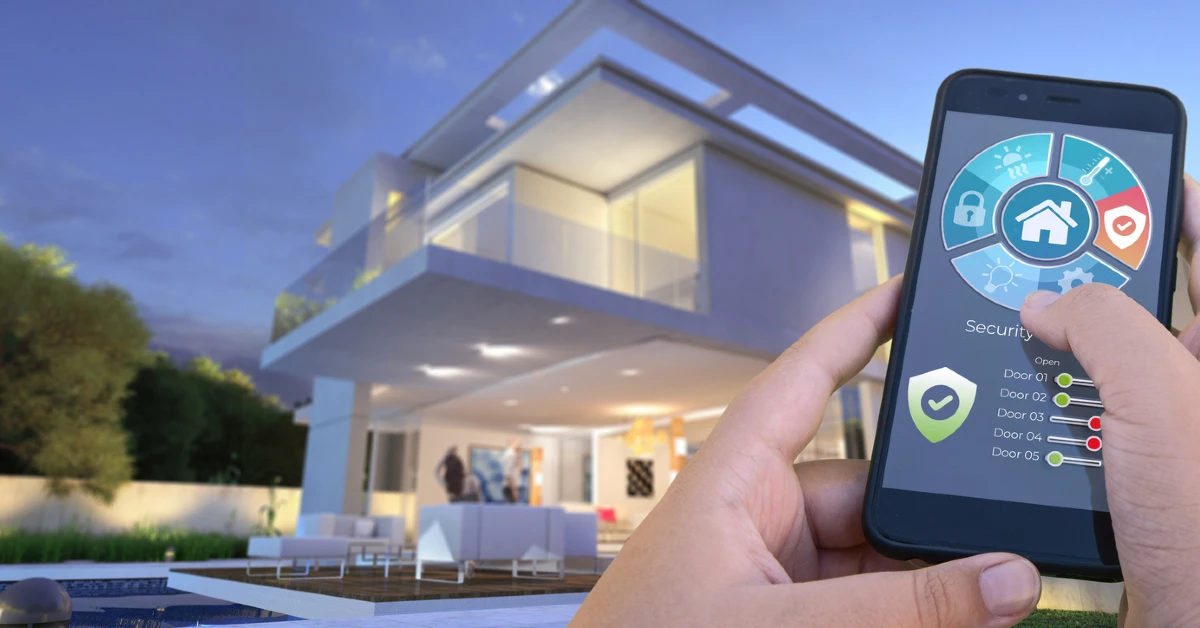
Smart exterior lighting refers to a network of outdoor illumination fixtures that are integrated with digital control systems, allowing for automated, remote, and responsive management of a property’s nighttime environment. Unlike traditional outdoor lights that rely on manual switches or simple mechanical timers, these systems utilize wireless protocols—such as Wi-Fi, Zigbee, or Bluetooth—to communicate with a central hub or smartphone application. The integration of high-efficiency LED technology with programmable logic allows property owners to manage security, safety, and architectural aesthetics through a single interface.
This guide provides a neutral, technical examination of the components and strategies that define smart exterior lighting systems. Readers will learn about the various hardware categories, the logistical requirements for installation, and the practical scenarios where automated lighting provides the most significant benefit. By exploring the interplay between low-voltage engineering and digital connectivity, homeowners and facility managers can develop a foundational understanding of how to implement a scalable and resilient outdoor lighting network.

Overview of Smart Exterior Lighting Systems
The core concept of a smart lighting network is “contextual illumination.” This means that the lights do not simply stay on or off; they respond to environmental triggers such as astronomical timers (sunset/sunrise), motion detection, or geo-fencing. Property owners typically approach smart exterior lighting systems with the goal of increasing energy efficiency and enhancing perimeter security. By dimming lights during late-night hours or activating specific zones only when movement is detected, the system reduces unnecessary power consumption while maintaining a vigilant presence.
Expectations for a modern system include a high degree of interoperability, where lighting fixtures can “talk” to other smart home devices like cameras or alarm systems. Typical outcomes involve a multi-layered lighting design: “path lighting” for safety, “uplighting” for architectural features, and “floodlighting” for security. Success is defined by a system that maintains a reliable wireless connection despite the physical barriers of exterior walls and varying weather conditions, ensuring that the automation logic executes consistently throughout the year.
Key Categories and Connectivity Types
Smart systems are primarily categorized by their voltage and the wireless protocol they use to transmit data.
| Category / Type | Description | Common Use Case | Effort / Cost Level |
| Low-Voltage (12V) | Safe, easy-to-install wires buried shallowly. | Landscape and path lighting. | Moderate / Medium |
| Line-Voltage (120V) | Traditional high-power wiring requiring conduit. | Security floodlights; porch lights. | High / High |
| Solar-Smart | Battery-powered units with integrated solar panels. | Remote areas without power access. | Low / Medium |
| Wi-Fi Integrated | Fixtures that connect directly to a home router. | Small systems (1–5 lights). | Low / Low-Medium |
| Mesh (Zigbee/Thread) | Lights that pass signals to each other. | Large properties; 10+ fixtures. | Moderate / High |
| Smart Transformers | Upgrades traditional 12V systems with digital logic. | Retrofitting existing landscapes. | Moderate / Medium |
Choosing between these categories depends on the scale of the property. For a single entryway, a Wi-Fi-integrated bulb may suffice. However, for a comprehensive landscape design, a low-voltage mesh system is generally preferred because it does not overcrowd the home’s Wi-Fi bandwidth and allows for “hop” communication to reach the far corners of a yard.
Practical Scenarios and Applications
Scenario 1: The Automated Security Perimeter
A property focused on deterring unauthorized entry through responsive light zones.
-
Components: Smart motion sensors, high-output LED floodlights, and a central bridge.
-
Steps: Map high-risk entry points, install sensors with overlapping fields of view, and program “if-then” logic (e.g., if motion is detected at the gate, turn on the porch and driveway lights at 100% brightness).
-
Relevance: This scenario provides an active deterrent that is more effective than “always-on” lights, which intruders can easily map and avoid.
Scenario 2: The Architectural and Social Atmosphere
A design intended to highlight the home’s masonry and provide a safe environment for evening gatherings.
-
Components: RGBW (color-changing) uplights, smart path lights, and dimmable bistro lights.
-
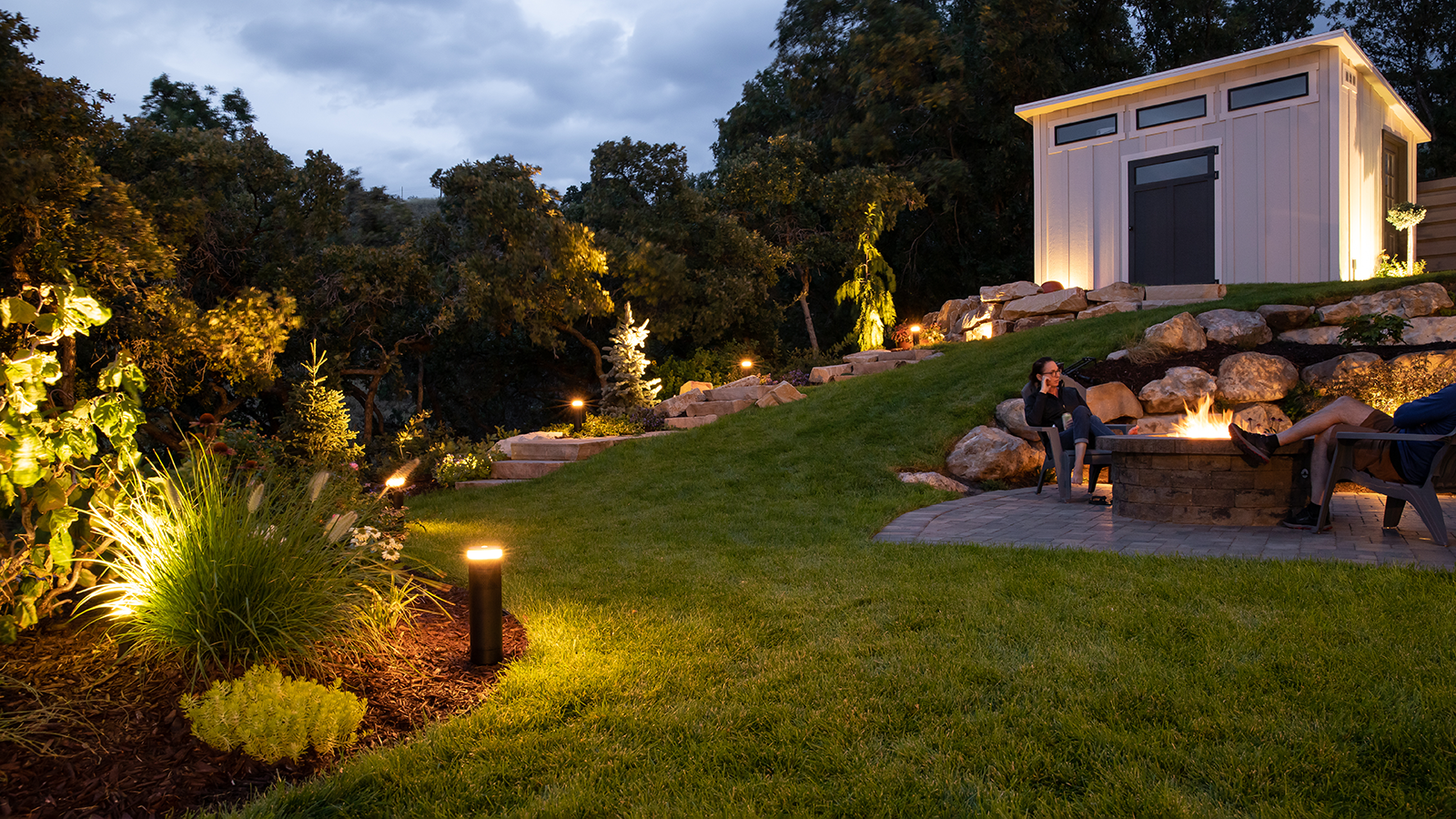
Steps: Position uplights at the base of trees or columns, set path lights 6 feet apart, and create “scenes” in the app (e.g., “Dinner Party” scene at 40% warm white).
-
Relevance: The ability to dim or change color temperatures allows the space to transition from a bright, safe functional area to a subtle, aesthetic environment.
Scenario 3: The Energy-Conscious Estate
A large property where the goal is to minimize light pollution and electricity costs.
-
Components: Astronomical timers, smart dimmers, and localized solar-smart markers.
-
Steps: Program lights to follow the local sunset/sunrise schedule, set late-night dimming to 10%, and use motion triggers for high-traffic paths only.
-
Relevance: This prevents “over-lighting,” which can disturb local wildlife and neighbors, while significantly extending the lifespan of the LED components.
Comparison: Scenario 1 focuses on high-intensity response; Scenario 2 prioritizes visual design; Scenario 3 emphasizes efficiency. Urban residents often prioritize Scenario 1, while those with extensive gardens suit Scenario 2.
Planning, Cost, and Resource Considerations
Meticulous planning ensures that the wireless signal can actually reach the fixtures through stone, brick, or dense foliage.
| Category | Estimated Amount / Effort | Explanation | Optimization Tips |
| Hub / Bridge | $50 – $200 | The “brain” that connects the lights to the net. | Place near an exterior wall for better range. |
| Fixtures (Smart) | $40 – $150 per unit | The cost of the actual LED light housing. | Buy “smart-ready” fixtures and add smart bulbs to save. |
| Wiring / Conduit | $2 – $5 per linear ft | Low-voltage wire and protective piping. | Use 12/2 gauge wire for long runs to avoid voltage drop. |
| Professional Labor | $500 – $2,500 | Electrician or landscape lighting specialist. | Labor is 60% of the cost for line-voltage systems. |
Note: Figures are examples for 2026 illustrative purposes. The final cost of smart exterior lighting systems is heavily influenced by the “smartness” of the individual bulbs versus a centralized smart transformer.
Technical Strategies and Support Options
Successful smart lighting depends on the stability of the signal and the quality of the power supply.
-
Wireless Range Extenders: Specialized “repeaters” designed for outdoor use.
-
Advantages: Eliminates “dead zones” in large yards. Disadvantages: Requires an outdoor power outlet.
-
-
Astronomical Timers: Software that calculates sunset based on GPS coordinates.
-
Advantages: Automatically adjusts for Daylight Savings and seasonal changes. Disadvantages: Requires an active internet connection.
-
-
Voltage Drop Calculation: Ensuring the last light on a 100-foot wire receives the same 12V as the first.
-
Advantages: Prevents flickering and premature bulb failure. Disadvantages: Requires thicker, more expensive wire.
-
-
Smart Bridges/Gateways: Hardware that translates Wi-Fi into Zigbee or Thread.
-
Advantages: More reliable for systems with 20+ lights. Disadvantages: Adds an extra piece of hardware to manage.
-
Safety, Risks, and Common Challenges
Outdoor electronics are subject to moisture, temperature fluctuations, and physical interference.
-
Wireless Interference: Thick masonry walls blocking the Wi-Fi signal. Prevention: Use a mesh-network protocol (Zigbee/Thread) or install an outdoor access point.
-
Water Ingress: Moisture entering the fixture and shorting the circuit. Prevention: Only use fixtures with an IP65 or IP67 rating and ensure all wire connectors are “gel-filled.”
-
Security Vulnerabilities: Unsecured smart hubs allowing access to the home network. Prevention: Use two-factor authentication (2FA) and keep the bridge firmware updated.
-
Voltage Overload: Adding too many lights to a single transformer. Prevention: Ensure the total wattage of the lights does not exceed 80% of the transformer’s capacity.
Maintenance and Long-Term Management
A smart lighting system is a dynamic asset that requires periodic hardware and software stewardship.
-
Lens Cleaning: Every six months, wipe the glass lenses of uplights to remove hard water spots and dirt that dim the output.
-
Firmware Updates: Check the mobile app monthly for system updates to ensure security patches and new features are applied.
-
Vegetation Trimming: Ensure that shrubs or groundcover have not grown over the lenses or blocked the motion sensors.
-
Connector Check: Every spring, inspect the buried wire connections for corrosion or damage from gardening tools.
-
Battery Replacement: For solar-smart units or remote sensors, replace rechargeable batteries every 2–3 years to maintain performance.
Documentation and Outcome Reporting
Organizing the technical data of your system is essential for troubleshooting and home valuation.
-
The Wiring Map: A diagram showing exactly where the low-voltage wires are buried.
-
Device ID Log: A list of every light’s name (e.g., “North Path 1”) and its unique MAC address or QR code.
-
Scene Library: Documentation of the specific brightness and color settings for different automated modes.
Example 1: A homeowner saves the “IP67 Rating” certificates to prove to an insurance company that the system is rated for hurricane-force rain.
Example 2: An owner maintains a map of the “Smart Bridge” location to assist a future homeowner in transferring the digital account.
Closing Summary
The implementation of smart exterior lighting systems represents a significant upgrade in property management, blending safety with energy efficiency. By choosing the appropriate connectivity protocol—such as Wi-Fi for small setups or Mesh for large landscapes—and prioritizing weather-rated hardware, property owners can create a responsive and resilient nighttime environment. Success in this field depends on meticulous planning of the wireless signal path and a commitment to maintaining both the physical fixtures and the digital logic that controls them.
FAQ
1. Do smart outdoor lights work without Wi-Fi? Most systems require the internet for remote control and updates. However, many “Mesh” systems (Zigbee) can still execute their pre-programmed local schedules even if the internet goes down, provided the central hub has power.
2. Can I use smart bulbs in my existing outdoor fixtures? Yes, as long as the fixture is weather-sealed. However, if the fixture is made of thick metal, it may block the wireless signal to the bulb. In such cases, a smart switch or transformer is a better option.
3. How long do smart LED exterior lights last? High-quality outdoor LEDs are typically rated for 25,000 to 50,000 hours. In a smart system where lights are dimmed or used only when needed, they can easily last 15 to 20 years.