Best Privacy Fence for Windy Areas: 2026 Engineering Guide
The Comprehensive Guide to Privacy Fencing in High-Wind Environments
Wind constitutes one of the most significant environmental stressors on residential and commercial fencing. In open plains, coastal regions, or high-altitude areas, a standard privacy fence can act as a massive sail, capturing wind energy and transferring that force directly to the posts and footings. Without specific engineering considerations, this pressure can lead to structural leaning, snapped posts, or the complete collapse of the fencing system. Selecting a fence for these conditions requires a balance between the desire for a visual barrier and the physical necessity of wind permeability.
This guide provides a technical and educational overview of the materials and designs that constitute the best privacy fence for windy areas. Readers will learn about the physics of wind-resistant structures, the importance of deep-foundation anchoring, and the various material options available in the current market. By understanding the interplay between solid surface area and aerodynamic “bleed,” property owners can implement a durable perimeter that offers privacy without succumbing to the mechanical fatigue caused by frequent gusts.
Overview of Best Privacy Fence for Windy Areas
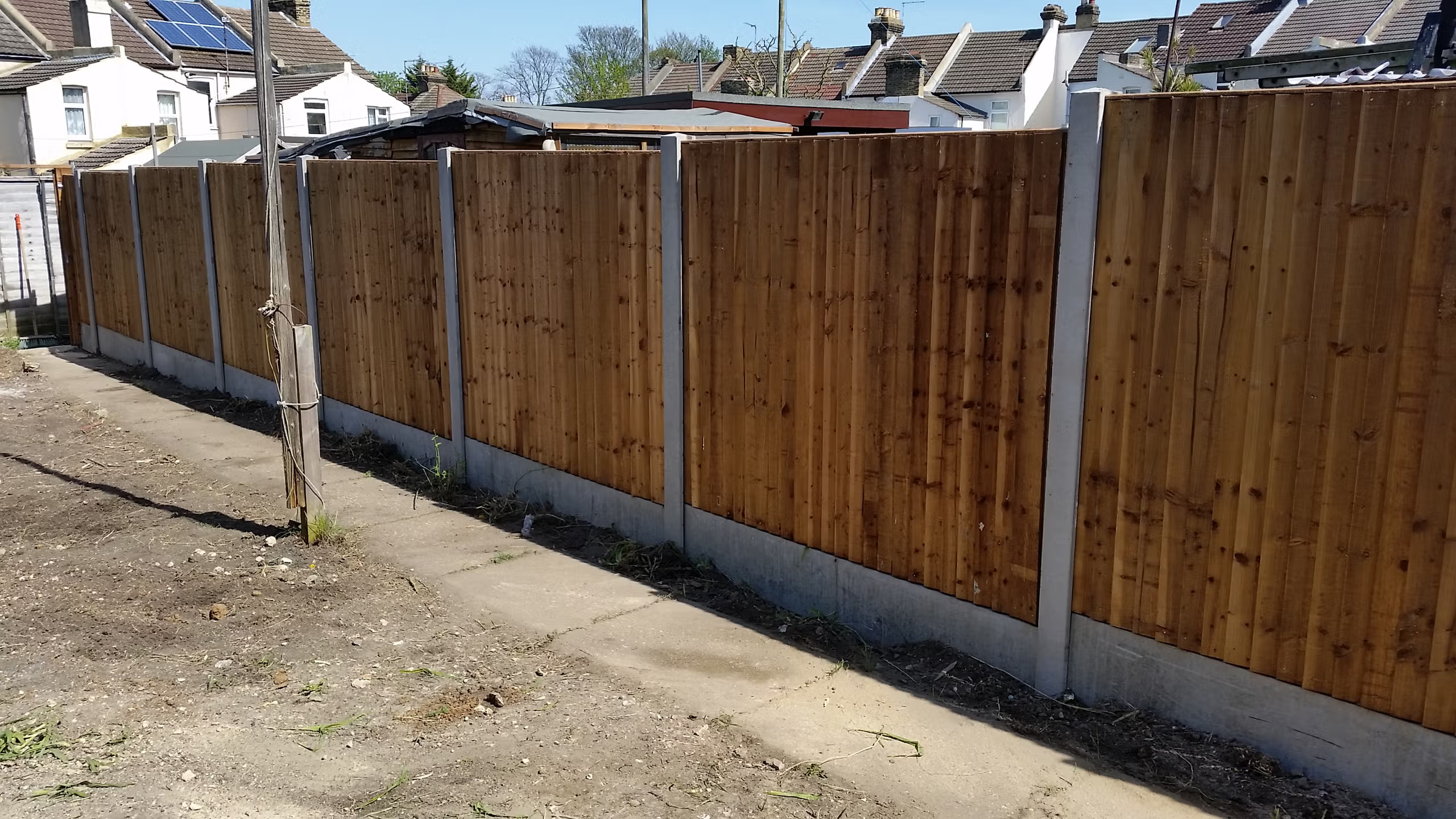
The core concept of wind-resistant fencing is the reduction of “wind load.” Wind load is the force exerted on a structure by the movement of air. Traditional solid-panel fences have a high wind load because they block 100% of the air, forcing the structure to absorb the total kinetic energy of the gust. Property owners in exposed locations typically approach fencing with the goal of creating a “semi-private” or “aerodynamic” barrier. This involves using designs that allow a portion of the wind to pass through the fence, thereby equalizing the pressure on both sides of the panel.
Expectations for the best privacy fence for windy areas should be centered on structural resilience rather than total opacity. While a solid vinyl or wood wall provides maximum privacy, it is often the most vulnerable to failure. A successful outcome in a high-wind zone is a fence that utilizes specialized materials—such as reinforced vinyl, aluminum, or gap-spaced wood—and is anchored into deep, concrete-reinforced footings. By prioritizing the “breathability” of the fence, owners can ensure the structure remains upright during severe weather events while still effectively obscuring the view into the property.
Key Categories and Design Approaches
Fences for windy areas are categorized by their material strength and their ability to diffuse air pressure.
| Category / Type | Description | Common Use Case | Effort / Cost Level |
| Shadowbox Wood | Alternating boards on both sides of the rail. | Residential backyards; suburbs. | Moderate / Medium |
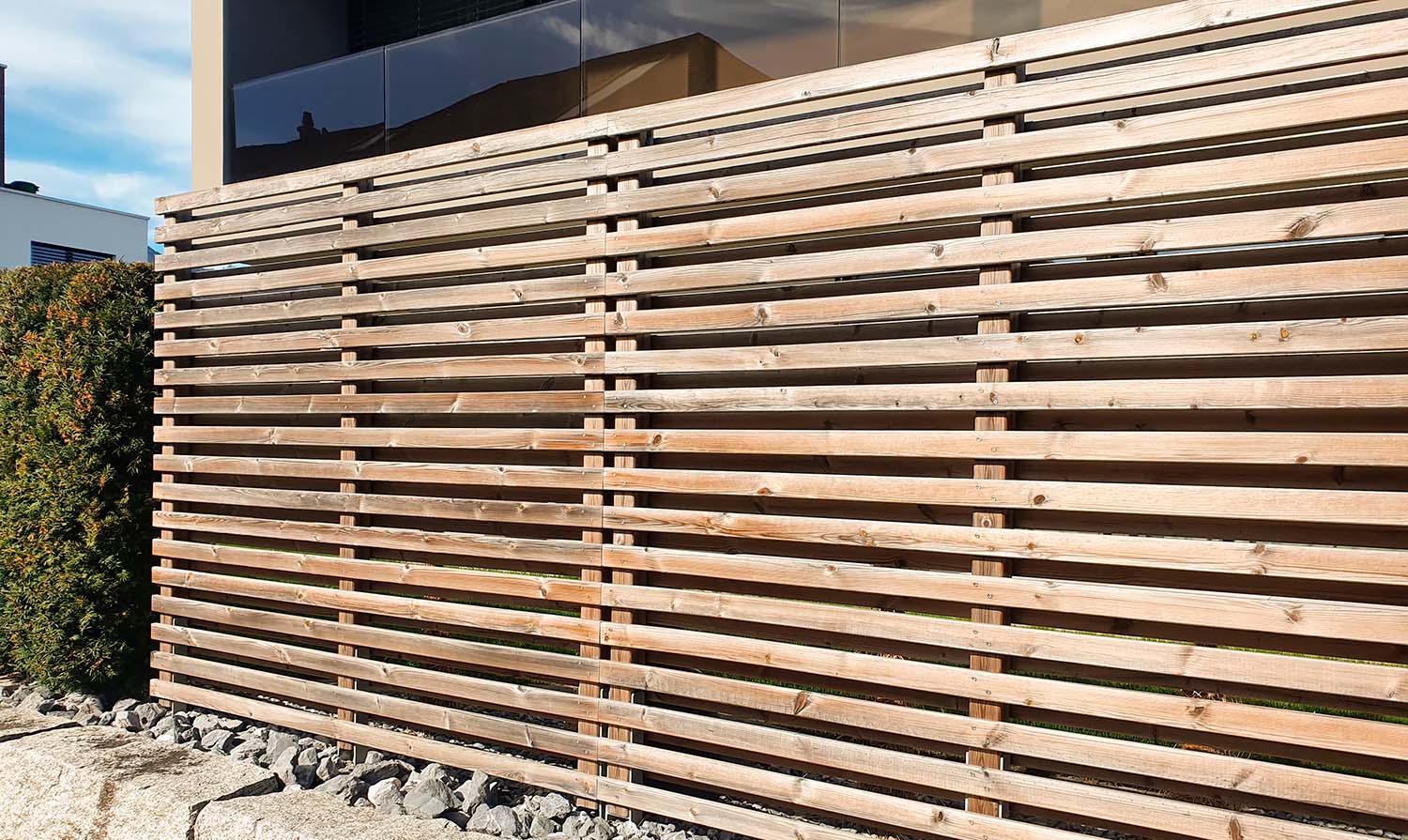
| Louvered Systems | Angled slats that allow air through but block views. | Modern architectural designs. | High / High |
| Reinforced Vinyl | Vinyl panels with internal steel or aluminum stiffeners. | Low-maintenance coastal areas. | Moderate / High |
| Aluminum Slat | Horizontal metal slats with small gaps. | Contemporary homes; luxury builds. | High / Very High |
| Trellis / Lattice | Cross-hatched patterns with high permeability. | Garden borders; decorative privacy. | Low / Low-Medium |
| Masonry / Stone | Solid walls with footings below the frost line. | Permanent estate boundaries. | Very High / Premium |
When choosing between these categories, the “gap ratio” is the primary technical consideration. A shadowbox fence, for example, is often considered the best privacy fence for windy areas because the offset boards allow air to flow through the fence in a zig-zag pattern. This maintains visual privacy from a direct angle while significantly reducing the drag coefficient of the structure.
Practical Scenarios and Applications
Scenario 1: The Coastal Beachfront
A property exposed to constant sea breezes and occasional tropical-force winds.
-
Components: 316-grade stainless steel hardware, aluminum slat fencing, and 36-inch deep concrete footings.
-
Steps: Use non-corrosive metal, maintain a 0.5-inch gap between slats, and anchor posts into oversized concrete collars.
-
Relevance: Aluminum does not warp in humidity, and the small gaps prevent the “sail effect” during coastal storms.
Scenario 2: The Open Plains Residence
A home on a large, flat lot where wind can travel miles without obstruction, reaching high velocities.
-
Components: Pressure-treated shadowbox wood fence with 6×6-inch structural posts.
-
Steps: Set posts every 6 feet instead of the standard 8 feet, use three horizontal rails for stability, and leave 1-inch offsets between boards.
-
Relevance: Shortening the distance between posts (the “span”) increases the total load-bearing capacity of the line, preventing the rails from snapping under pressure.
Scenario 3: The Urban Rooftop or Balcony
A high-rise terrace where “wind tunnel” effects are created by surrounding buildings.
-
Components: Bolt-down louvered steel panels and vibration-dampening gaskets.
-
Steps: Mechanically fasten steel base plates to the structural slab and use angled louvers to deflect wind upward.
-
Relevance: In this scenario, the fence must manage wind that moves both horizontally and vertically, requiring a rigid, engineered metal solution.
Comparison: Scenario 1 prioritizes corrosion resistance; Scenario 2 prioritizes structural “stiffness” through post frequency; Scenario 3 prioritizes aerodynamic deflection. Coastal residents suit Scenario 1, while rural landowners with long fence lines generally favor Scenario 2 for its cost-to-performance ratio.
Planning, Cost, and Resource Considerations
Meticulous planning in windy areas involves calculating the “tributary area”—the amount of wind force each post is expected to support.
| Category | Estimated Amount / Effort | Explanation | Optimization Tips |
| Post Deepening | $20 – $50 per post | Extra concrete and labor for deeper holes. | Go 1/3 to 1/2 of the post height into the ground. |
| Heavy-Duty Posts | 20%–40% Premium | Switching from 4×4 to 6×6 wood or thick-wall metal. | This is the most critical area for wind resistance. |
| Permeable Panels | Moderate Effort | Labor to space boards or assemble louvers. | Use a spacer tool to ensure uniform air gaps. |
| Engineering Review | $500 – $1,500 | Structural sign-off for tall or exposed walls. | Often required for fences over 6 feet in high-wind zones. |
Note: Figures are examples for 2026 illustrative purposes. Actual costs vary based on soil density (rocky vs. sandy) and regional labor rates.
Technical Strategies and Support Options
Successful high-wind fencing utilizes specific mechanical strategies to increase the “moment capacity” of the posts.
-
Concrete Collars: Increasing the diameter of the concrete base to provide more “skin friction” against the soil.
-
Advantages: Prevents the post from “wiggling” and loosening the soil. Disadvantages: Requires more manual labor and material.
-
-
Internal Stiffeners: Aluminum or steel inserts placed inside hollow vinyl or composite posts.
-
Advantages: Provides the strength of metal with the look of vinyl. Disadvantages: Increases material cost per linear foot.
-
-
Post Sleeves: High-density polyethylene sleeves that protect wood posts from rot at the ground line.
-
Advantages: Prevents the post from snapping due to “ground-line rot.” Disadvantages: Minor additional material cost.
-
-
Aerodynamic Slats: Using curved or angled slats (louvers) to direct airflow.
-
Advantages: Maintains 100% visual privacy while allowing 20% airflow. Disadvantages: Complex installation and higher material cost.
-
Safety, Risks, and Common Challenges
High-wind environments present unique risks that can lead to property damage or personal injury if the fence fails.
-
Post “Heaving”: Wind pressure rocking the post until the concrete base lifts out of the ground. Prevention: Use “bell-bottom” holes (wider at the bottom than the top) to lock the concrete into the earth.
-
Fastener Shear: Wind vibration causing screws or nails to snap. Prevention: Use galvanized or stainless steel lag bolts rather than standard nails for rail-to-post connections.
-
Soil Liquefaction: Saturated soil losing its grip on the fence posts during a storm. Prevention: Ensure proper yard drainage and use gravel at the bottom of post holes for moisture runoff.
-
Property Damage: A falling fence damaging a neighbor’s vehicle or home. Prevention: Adhere to local 2026 building codes, which often mandate specific wind-speed ratings for fences.
Maintenance and Long-Term Management
A wind-resistant fence is a mechanical system that requires periodic stewardship to maintain its structural integrity.
-
Post-Storm Inspection: After any wind event exceeding 50 mph, physically check each post for “wiggle” or leaning.
-
Fastener Tightening: Wind causes constant vibration, which can loosen bolts. Check and tighten all structural hardware every 12 months.
-
Plumb Leveling: If a fence begins to lean, it must be corrected immediately. A leaning fence absorbs wind force unevenly, leading to rapid failure.
-
Vegetation Management: Ensure that vines or heavy shrubs are not growing on the fence; they increase the “sail area” and add weight, making the fence more likely to fail in a gust.
Documentation and Reporting
Organizing the technical data of your fence installation is essential for insurance claims and home valuation.
-
The Post Hole Log: Documentation (or photos) showing the depth and diameter of the footings before the concrete was poured.
-
Material Specifications: Receipts and data sheets showing the wind-speed rating of the specific fencing system.
-
Example 1: A homeowner saves the “Wind Load Certification” from a vinyl manufacturer to prove the fence is rated for 110 mph gusts.
-
Example 2: An owner maintains a photo of the “rebar reinforcement” inside the concrete footings to assist an insurance adjuster after a catastrophic storm.
Closing Summary
Identifying the best privacy fence for windy areas involves a transition from traditional solid barriers to engineered, permeable systems. By prioritizing structural post depth, utilizing aerodynamic designs like shadowbox or louvered panels, and selecting materials suited to local climate stressors, property owners can achieve privacy without compromising structural safety. Success in these environments depends on the invisible engineering of the footings and the strategic spacing of components to allow wind to pass through rather than against the structure.
FAQ
1. Is vinyl or wood better for windy areas? Standard vinyl is often more prone to “shattering” in high winds unless it is specifically reinforced with internal metal stiffeners. Wood is naturally more flexible but requires shorter spans (6 feet instead of 8 feet) and thicker posts to remain stable.
2. How deep should fence posts be in windy regions? A general rule of thumb is to bury at least 1/3 of the total post length. For a 6-foot privacy fence in a high-wind area, a depth of 36 to 42 inches is recommended to ensure stability.
3. Do gaps in a fence really help with wind? Yes. Even a small gap (1/2 inch to 1 inch) between boards allows enough air to pass through to significantly reduce the pressure on the posts, often preventing the structural failure seen in “solid” fences.