Low Maintenance Landscaping for Front Yard: 2026 Professional Guide
The Comprehensive Guide to Low Maintenance Front Yard Landscaping
Low maintenance landscaping refers to the strategic design and implementation of outdoor spaces intended to minimize the ongoing requirements for labor, water, and chemical inputs. In the context of a front yard, this approach prioritizes structural longevity and biological stability over high-dependency ornamental features. By shifting away from traditional turf-heavy designs, property owners can create a professional, polished appearance that remains consistent throughout the seasons without the need for weekly mowing or intensive irrigation.
This guide provides a neutral, educational overview of the principles governing low maintenance landscaping for front yard environments. Readers will learn about the foundational elements of xeriscaping, the use of hardscapes, and the selection of hardy, region-specific plant species. By understanding the interplay between soil preparation, mulch application, and spatial planning, homeowners can transition from a labor-intensive yard to a self-sustaining exterior asset that preserves both time and natural resources.
Overview of Low Maintenance Landscaping for Front Yard
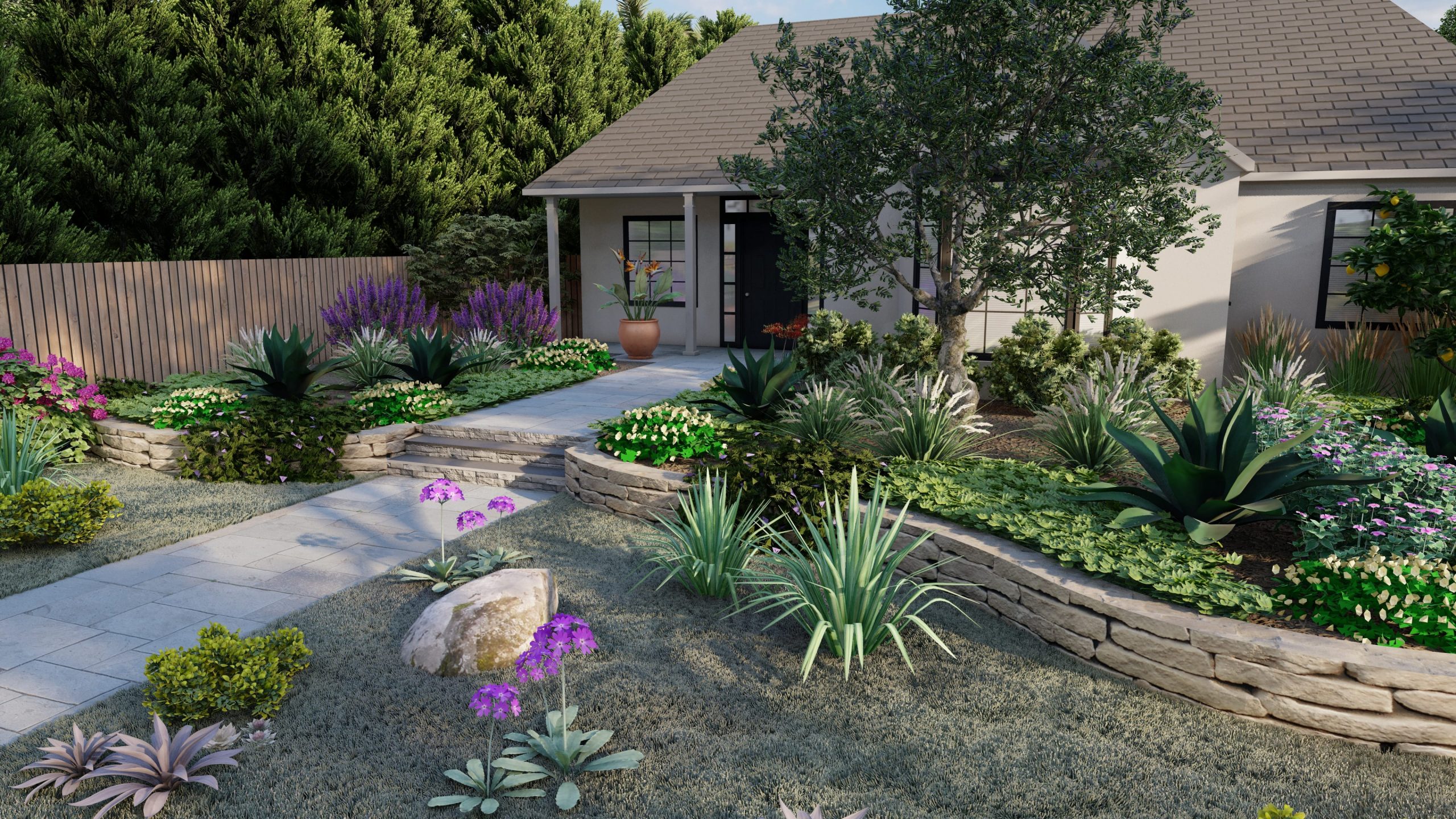
The core concept of low maintenance landscaping for front yard applications is “efficiency by design.” Traditional landscaping often relies on high-water-consumption grass and exotic plants that require frequent pruning and fertilization. In contrast, a low-maintenance approach utilizes “hardscaping” (non-living elements like stone and wood) and “xeriscaping” (landscaping that requires little to no irrigation) to create a structured environment. The goal is to reduce the “biological workload” of the yard while maintaining high curb appeal and property value.
Commonly, property owners approach this task by identifying the primary sources of maintenance: weeding, watering, and mowing. Typical outcomes involve the replacement of large lawn areas with gravel beds, mulch-covered perennial islands, or paved paths. Success is defined by a landscape that matures gracefully over five to ten years with minimal intervention, utilizing a “right plant, right place” philosophy that ensures each biological element is suited to the local microclimate and soil type.
Key Categories and Design Approaches
Low-maintenance designs are generally categorized by the ratio of living to non-living elements and the specific environmental conditions of the site.
| Category / Type | Description | Common Use Case | Effort / Cost Level |
| Xeriscaping | Use of drought-tolerant plants and inorganic mulches. | Arid climates; water-restricted areas. | Moderate / Medium |
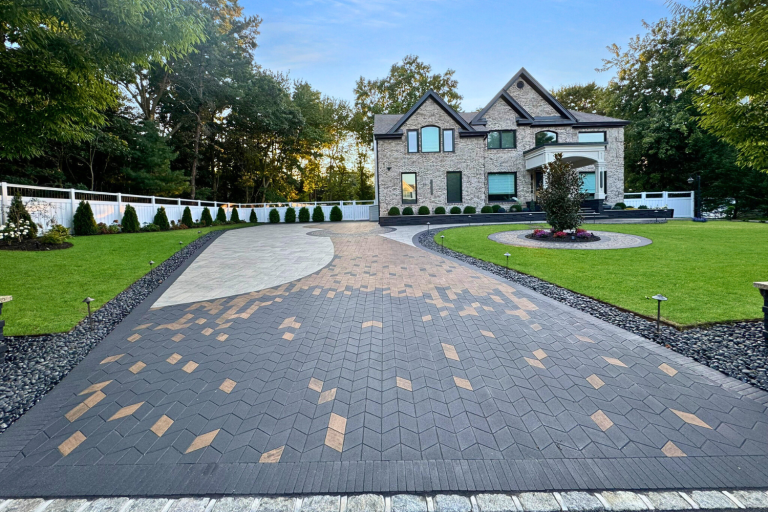
| Hardscape-Dominant | Focuses on pavers, stone walls, and gravel paths. | Modern architectural homes; small yards. | High / High |
| Perennial Groundcover | Replacing grass with spreading, low-height plants. | Sloped yards; shaded areas. | Low-Moderate / Low |
| Meadow / Native | Utilizing local wildflowers and grasses. | Eco-friendly builds; large open lots. | Moderate / Low-Medium |
| Evergreen Structure | Use of slow-growing conifers and shrubs. | Year-round privacy; cold climates. | Moderate / Medium |
Choosing between these categories depends on the “biological baseline” of the region. For instance, a hardscape-dominant design is effective in urban centers to manage heat, whereas a native meadow approach is more suitable for suburban environments seeking to support local pollinators while eliminating the need for lawn chemicals.
Practical Scenarios and Applications
Scenario 1: The Modern Arid Frontage
A property located in a high-heat, low-rainfall region where traditional lawns fail without extreme water usage.
-
Components: Crushed granite mulch, agave or yucca plants, and a drip irrigation system.
-
Steps: Remove existing turf, install a heavy-duty weed barrier, lay drip lines, and plant succulents in clusters.
-
Relevance: This scenario eliminates the need for mowing and reduces water consumption by up to 80% compared to a grass lawn.
Scenario 2: The Shaded Woodland Entry
A front yard heavily shaded by mature trees where grass is thin and moss-prone.
-
Components: Bark mulch, Hostas or Ferns, and a flagstone walking path.
-
Steps: Clean out dead undergrowth, define path borders with cedar edging, and plant shade-tolerant perennials.
-
Relevance: By working with the shade rather than fighting it, the homeowner avoids the constant struggle of trying to grow light-dependent turf in an unsuitable environment.
Scenario 3: The Suburban “No-Mow” Perennial Island
A standard suburban lot where the goal is to eliminate 70% of the lawn area to reduce weekend maintenance.
-
Components: Large boulders, slow-growing boxwoods, and a “living mulch” of creeping thyme.
-
Steps: Sheet-mulch (cardboard over grass) to kill turf, install boulders as focal points, and plant perennials.
-
Relevance: This creates a defined, “designed” look that requires only a quick seasonal trim rather than weekly mowing.
Comparison: Scenario 1 focuses on water conservation; Scenario 2 addresses environmental constraints (shade); Scenario 3 focuses on time management for the homeowner. Readers in sunny, dry areas suit Scenario 1, while those with established trees should follow Scenario 2.
Planning, Cost, and Resource Considerations
:max_bytes(150000):strip_icc()/GettyImages-494526921-def1d9162bc84fab8120e8558e779df1.jpg)
Effective planning ensures that the transition to low maintenance does not lead to “maintenance debt” through poor soil prep or invasive plant choices.
| Category | Estimated Amount / Effort | Explanation | Optimization Tips |
| Hardscape Materials | $10 – $25 per sq. ft. | Cost of pavers, river rock, or flagstone. | Source local stone to reduce shipping costs. |
| Living Materials | $500 – $2,500 | Perennials, shrubs, and native grasses. | Buy smaller plants; they adapt faster and cost less. |
| Soil / Mulch Prep | Moderate Effort | Compost, weed barrier, and bulk mulch. | Use 3 inches of mulch to suppress 90% of weeds. |
| Irrigation (Drip) | $500 – $1,500 | Specialized lines for targeted watering. | Use a smart timer to automate the process. |
Note: Figures are examples for 2026 illustrative purposes. Initial costs for hardscaping are often higher than turf, but ROI is reached through lower water and labor costs over 3–5 years.
Technical Strategies and Support Options
Successful low-maintenance outcomes rely on specific technical strategies that inhibit weed growth and promote plant health.
-
Sheet Mulching (Lasagna Gardening): Placing cardboard or newspaper over grass and covering it with mulch.
-
Advantages: Kills weeds without chemicals; adds organic matter. Disadvantages: Takes 3–6 months to fully break down.
-
-
Drip Irrigation: A system of tubes that delivers water directly to the roots.
-
Advantages: Minimizes evaporation and prevents weed growth in unplanted areas. Disadvantages: Requires periodic checking for clogs.
-
-
Steel or Stone Edging: Permanent borders between different sections of the yard.
-
Advantages: Prevents grass or mulch from migrating. Disadvantages: Higher initial installation labor.
-
-
Slow-Release Fertilizers: Granular nutrients that break down over 6–9 months.
-
Advantages: Eliminates the need for monthly feeding. Disadvantages: Must be applied at the correct seasonal window.
-
Safety, Risks, and Common Challenges
Landscaping involves physical risks and biological challenges that must be managed to ensure the project’s success.
-
Invasive Species: Planting “fast-growing” groundcover that eventually takes over the entire yard. Prevention: Only use non-invasive, native, or “clumping” varieties recommended by local agricultural extensions.
-
Drainage Interference: Hardscaping that causes water to pool near the house foundation. Prevention: Ensure a 2% slope away from all structures and use permeable materials where possible.
-
Heat Reflection: Large areas of white rock can reflect intense heat onto the house or sensitive plants. Prevention: Use darker or earth-toned stones and provide adequate spacing for airflow.
-
Utility Punctures: Digging into buried lines for irrigation or lighting. Prevention: Mandatory utility marking (“811”) before any excavation.
Maintenance and Long-Term Management

A “low-maintenance” yard is not “no-maintenance.” Consistent, minimal care prevents the landscape from returning to a wild state.
-
Monthly Weed Check: Spend 15 minutes pulling any stray weeds that have managed to sprout in the mulch.
-
Seasonal Mulch “Top-Off”: Every 2–3 years, add a fresh 1-inch layer of organic mulch to maintain the weed barrier and moisture retention.
-
Perennial Dividing: Every 3–5 years, certain plants may become too large and require dividing to maintain the design’s scale.
-
Irrigation Flush: Once a year, flush the drip lines and check the emitters for salt or mineral buildup.
-
Pruning: Conduct a single “annual haircut” for shrubs and grasses in the late winter or early spring to encourage fresh growth.
Documentation and Reporting
Organizing the technical data of your yard is essential for home resale value and for managing the landscape over time.
-
Plant Palette Map: A diagram showing the location and species name of every plant.
-
Irrigation Schematic: A map of where drip lines and valves are buried.
-
Soil Test Results: Documentation of the pH and nutrient levels before the build.
Example 1: A homeowner saves the “Plant Tags” in a binder to ensure that any replacement plants purchased in five years are a perfect match.
Example 2: An owner maintains a record of the “Mulch Volume” (e.g., “5 cubic yards”) to simplify the ordering process for future top-offs.
Closing Summary
The implementation of low maintenance landscaping for front yard environments is a strategic investment in both time and property value. By prioritizing hardscaping, native plants, and proper soil preparation, property owners can create a professional-grade exterior that requires a fraction of the labor associated with traditional lawns. Success in this approach depends on understanding local environmental constraints and committing to a design that works in harmony with the natural microclimate of the site.
FAQ
1. Is gravel better than wood mulch for low maintenance? Gravel is a “permanent” mulch and does not break down, but it can trap heat and is difficult to plant in later. Wood mulch improves soil health but must be replenished every 2–3 years.
2. Can I have a low-maintenance yard with a dog? Yes, but you should avoid delicate groundcovers. Utilizing “pet-friendly” turf alternatives like clover or durable pea gravel areas is recommended for high-traffic pet zones.
3. Does low-maintenance landscaping cost more to install? Often, yes. The upfront cost for hardscaping and established native plants is higher than a bag of grass seed, but the savings in water, fertilizer, and labor usually provide an ROI within a few years.